











Peptides are transforming the world of medicine, offering a safer, more targeted approach to healing. However, with the rise of unregulated options online, how can you ensure you're using them safely and effectively? Peptides 1 have emerged as a powerful class of therapeutic agents in modern medicine because of their high specificity, low side‑effect profiles, and ability to interact with biological systems in a targeted manner. Therapeutic peptides commonly function as hormones, growth factors, neurotransmitters, ion-channel ligands, or anti-infective agents.
At Vita Bella, we understand the growing interest in peptides and their potential to revolutionize health and wellness. However, with the increasing availability of unregulated research peptides, it’s crucial to prioritize safety. Our team ensures that you receive high-quality, safe, and effective peptide therapy tailored to your specific health goals. Vita Bella will guide you through the world of peptides, providing you with professional support and peace of mind as you unlock your full wellness potential.
What are Peptides? Understanding the Basics
Peptides are short chains of amino acids, essentially smaller versions of proteins linked together by peptide bonds. Because they are structurally similar to naturally occurring hormones, growth factors, and signaling molecules in the body, peptides can often engage with their targets with very high specificity and affinity, reducing “off‑target” effects frequently seen with traditional small‑molecule drugs. According to research 1, peptides are generally unable to cross the cell membrane, thereby limiting their applications in drug development.
Peptides typically range from 2 to 50 amino acids in length, making them smaller, simpler, and closer to endogenous (body‑derived) substances than many conventional medications. Their amino‑acid structure makes them easy for the body to recognize, which helps reduce immune reactions and widespread side effects compared to larger biologics. As per research 2, peptides exhibit favorable tissue penetration and the ability to engage in specific, high-affinity interactions with endogenous receptors.
Why Therapeutic Peptides Tend to Have Good Safety Profiles
Therapeutic peptides tend to have good safety profiles because they closely mimic naturally occurring molecules in the body, ensuring high specificity and compatibility. This reduces the risk of off-target effects and immune responses, unlike many traditional medications that disrupt multiple biological pathways. One of the significant reasons peptides are seen as safer stems from their biological basis:
Peptide drugs often bind to defined receptors (like hormones do), leading to precise biological responses rather than broad systemic effects.
Many peptide therapeutics are designed to mimic endogenous molecules, making them biologically familiar to the body and reducing the risk of unexpected reactions.
According to research 3, therapeutic peptides generally produce lower immune responses than large protein biologics or small molecules that perturb many pathways.
They are often cleared quickly, reducing the likelihood of long‑lasting adverse effects, as peptides are structurally closer to naturally occurring hormones.
What Are Some Peptides Approved for Medical Use?
The FDA has approved several peptides for use in treating various medical conditions. These peptides have undergone extensive clinical testing and have proven to be both practical and safe for specific therapeutic uses. Peptides are not just a theoretical class of drugs; they are widely used in approved human therapeutics across many conditions:
1- Diabetes and Metabolic Diseases
GLP-1-derived peptide drugs are 37-amino acid peptides that regulate insulin production and secretion, with a very short half-life in vivo. GLP‑1 receptor agonist peptide drugs like semaglutide, tirzepatide, and liraglutide have become widely prescribed for diabetes and weight management, with strong evidence of safety and metabolic benefit in humans.
2- Oncology and Targeted Cancer Treatments
Peptides play a crucial role as therapeutic agents in various fields, including diagnosis, immunology, and drug discovery. A review 4 explains that they are able to act as hormones and neurotransmitters, bind to cell surfaces, and trigger intracellular signals with incredible affinity and specificity, with low immunogenicity. Some peptide drugs can help guide immune responses or deliver cytotoxic agents specifically to tumor cells, offering safety advantages over generalized chemotherapy.
According to clinical reviews 5, at least 15 therapeutic peptides are already approved for human use in a variety of diseases, with several therapeutic peptide candidates currently undergoing clinical trials to evaluate their safety and effectiveness in treating various diseases. These peptides were conjugated with camptothecin to form a peptide-drug conjugate for cancer therapy.
What Is BPC-157? A Case Study of Bioactive Gastric Peptides
One research 6 topic often discussed in peptide forums is BPC‑157. This is a pentadecapeptide initially identified in gastric juice, suggesting that similar peptides naturally exist within the body. BPC-157 was found in the gastrointestinal mucosa, lung bronchial epithelium, epidermal layer of the skin, and kidney glomeruli. Thereby, it was suggested that in addition to BPC being isolated from gastric juice and probably primarily acting in the gastrointestinal system, it may have additional regulatory roles in the function of the human lung, kidney, and skin.
Because such peptides may resemble endogenous compounds, researchers hypothesize that they may have beneficial signaling roles such as tissue modulation and recovery. However, while preclinical models and small clinical case reports hint at a favorable safety profile, there is no large‑scale human clinical evidence confirming safety or approved indications for many of these peptides.
Why Peptide Drugs Often Have Fewer Side Effects
Healthcare scientists have observed several reasons peptide drugs tend to be well‑tolerated. The advantages explain why approved peptide therapeutics, such as those used in metabolic and endocrine disorders, are often regarded as safer alternatives to many long‑established pharmaceutical agents. Let's break down these benefits further:
High biological specificity minimizes interaction with unrelated systems.
Low immunogenicity reduces antibody‑mediated adverse reactions.
Rapid metabolism lowers the likelihood of drug accumulation and toxicity.
Experience Safe Peptides - Book with Vita Bella Today
With the unregulated peptide market growing rapidly, many individuals risk purchasing unsafe, ineffective products. These peptides often lack clinical data, leaving users exposed to potential harm and unknown side effects. Additionally, the absence of regulation means there's no guarantee of product purity or potency. As a result, consumers are often unknowingly compromising their health by using these unverified products.
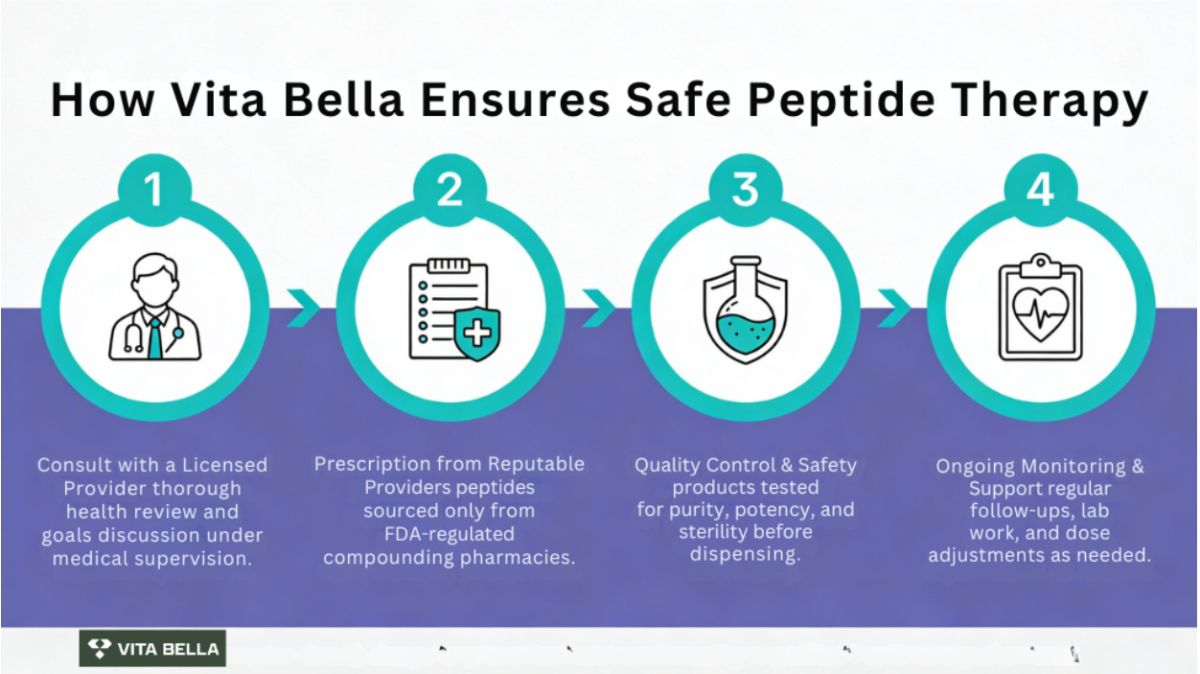
At Vita Bella, we prioritize your safety by offering peptide therapy prescribed by licensed professionals and sourced from FDA-approved pharmacies. Our team provides trusted, regulated peptide treatments designed to enhance your wellness journey without the risks associated with unregulated products. With our expert guidance, you can confidently achieve your health goals with peace of mind.
FAQs
Are peptides safer than traditional medications?
Yes, peptides are generally considered safer than many traditional medications. This is because they mimic naturally occurring substances in the body, making them more specific and less likely to cause widespread side effects. Peptides are also typically cleared quickly from the body, reducing the risk of long-term adverse effects.
Can peptides be used long-term for medical treatments?
Yes, many FDA-approved peptides are designed for long-term use, particularly for managing chronic conditions like diabetes or obesity. For example, GLP-1 receptor agonists, such as semaglutide, have been shown to provide sustained benefits in weight loss and blood sugar regulation when used appropriately under medical supervision.
Are unregulated research peptides safe for human use?
No, unregulated research peptides are not safe for human use. These peptides are not FDA-approved, lack proper clinical testing, and may have unknown side effects. Using such peptides poses significant risks due to contamination, improper dosing, and the absence of safety data, making them unsafe for consumption.
Do peptides require a prescription?
Yes, FDA-approved peptides require a prescription from a licensed healthcare provider. These peptides, like insulin or GLP-1 agonists, are prescribed based on a patient’s medical condition and needs. It’s essential to use peptides under professional guidance to ensure proper dosage and to avoid potential risks associated with unregulated products.
References:
Wang, L., Wang, N., Zhang, W., Cheng, X., Yan, Z., Shao, G., Wang, R., & Fu, C. (2022). Therapeutic peptides: Current applications and future directions. Signal Transduction and Targeted Therapy, 7(1), 48. https://doi.org/10.1038/s41392-022-00904-4
Martínez‑Villaluenga, C., & Hernández‑Ledesma, B. (2022). Peptides for health benefits 2020. International Journal of Molecular Sciences, 23(12), 6699. https://doi.org/10.3390/ijms23126699
Achilleos, K., Petrou, C., Nicolaidou, V., & Sarigiannis, Y. (2025). Beyond efficacy: Ensuring safety in peptide therapeutics through immunogenicity assessment. Journal of Peptide Science, 31(6), e70016. https://doi.org/10.1002/psc.70016
Al Musaimi, O. (2024). Peptide therapeutics: Unveiling the potential against cancer—A journey through 1989. Cancers, 16(5), 1032. https://doi.org/10.3390/cancers16051032
Fetse, J., Kandel, S., Mamani, U.-F., & Cheng, K. (2023). Recent advances in the development of therapeutic peptides. Trends in Pharmacological Sciences, 44(7), 425–441. https://doi.org/10.1016/j.tips.2023.04.003
Sikiric, P., Boban Blagaic, A., Strbe, S., Beketic Oreskovic, L., Oreskovic, I., Sikiric, S., Staresinic, M., Sever, M., Kokot, A., Jurjevic, I., Matek, D., Coric, L., Krezic, I., & Tvrdeic, A. (2024). The stable gastric pentadecapeptide BPC 157 pleiotropic beneficial activity and its possible relations with neurotransmitter activity. Pharmaceuticals, 17(4), 461. https://doi.org/10.3390/ph17040461